A meniscus tear knee brace addresses two things: medial and lateral stability, and range of motion control.
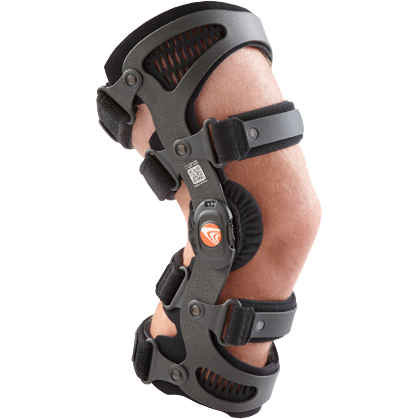
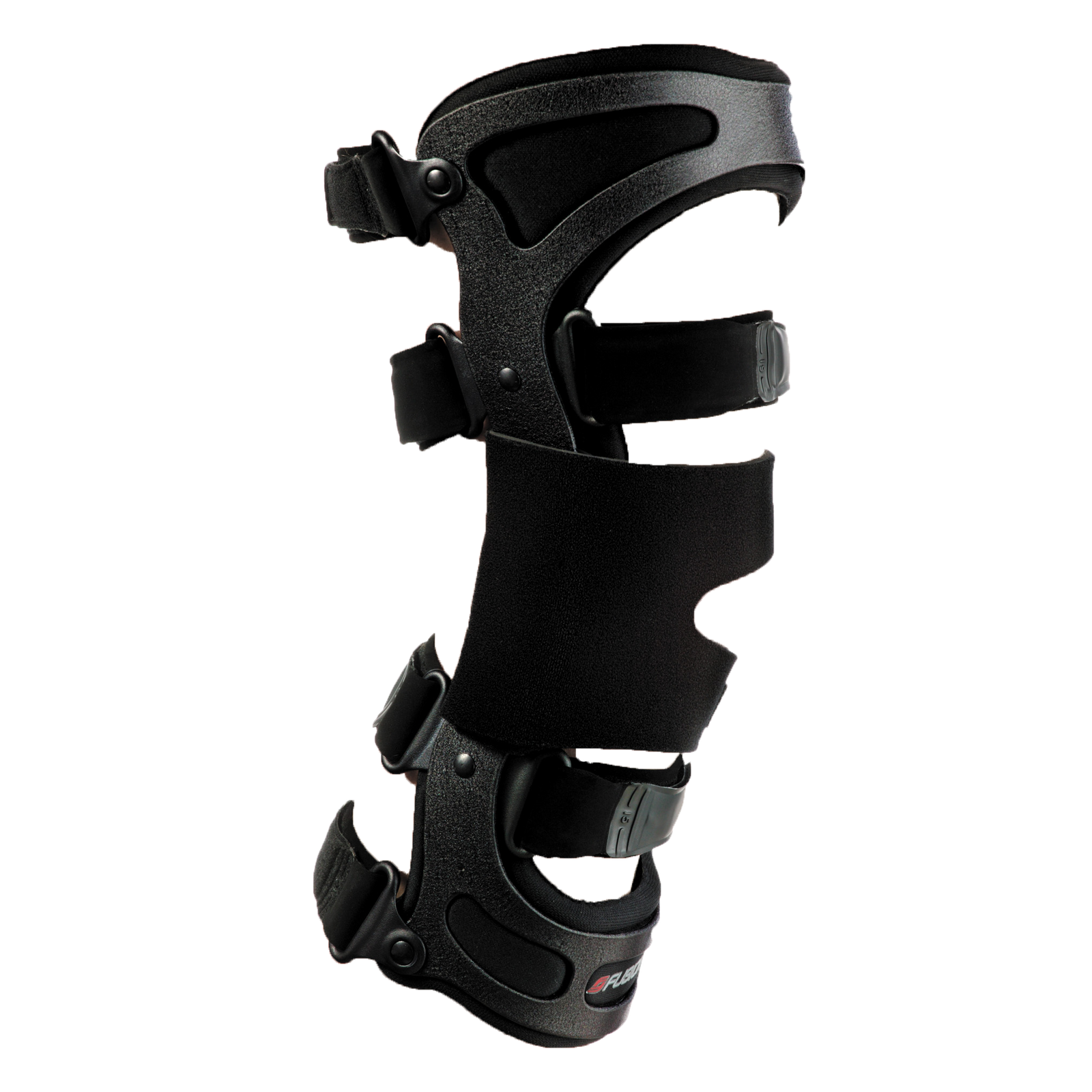
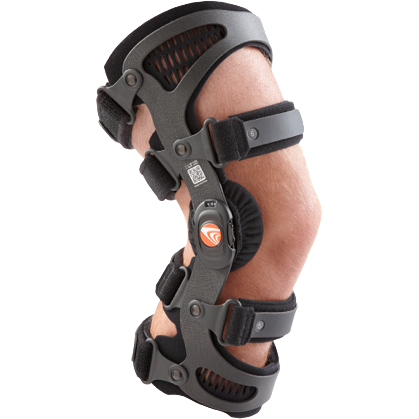
Medial and lateral stability come from bilateral polycentric hinges on either side of the knee. These hinges limit side-to-side movement, which is the direction most likely to stress a compromised meniscus during walking, turning, or descending stairs. The hinges allow the knee to flex and extend naturally while reducing lateral force that can worsen a tear. For everyday tasks like changing direction or descending steps, this stability can make a real difference in both comfort and confidence during movement.
After surgery, range of motion control is crucial. When a meniscus has been repaired or partially removed, the knee needs to stay within a defined arc during early healing. A post-operative brace with adjustable ROM settings allows a care provider to set how far the knee can bend or extend at each stage. Always consult your physician or physical therapist before selecting a meniscus brace, as the right choice depends on the severity of the tear, surgical involvement, and your activity level.
Non-Surgical Support Vs. Post-Op Recovery: Two Different Requirements
The path a meniscus tear takes varies by severity. Some tears are managed non-surgically with rest, physical therapy, and external support. Others require surgical repair or partial removal. Each path calls for a different type of brace.
For non-surgical management, the goal is to support the knee during daily activity while limiting movements that could worsen the situation. A functional hinged brace that allows natural walking motion while providing medial and lateral stability is the practical choice. This suits people who need reliable support through their daily routine without restrictive hardware.
For post-surgical recovery, the immediate period requires structured stabilization with ROM restriction that can be adjusted by the care team over time. The two DonJoy braces we carry address both situations directly.
Two Knee Braces For Meniscus Support
We carry two DonJoy knee braces for meniscus tear recovery. One is built for daily non-surgical use; the other is designed for the post-operative period with precise ROM control.
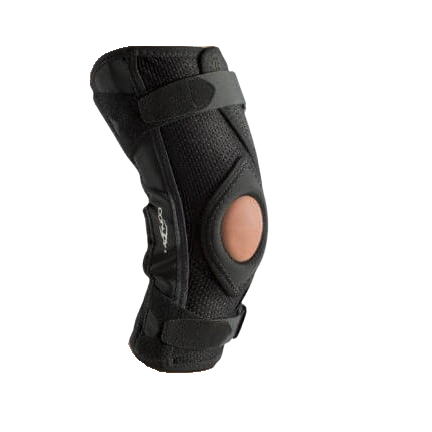
DonJoy Sport Drytex Economy Hinged Knee Wrap Around
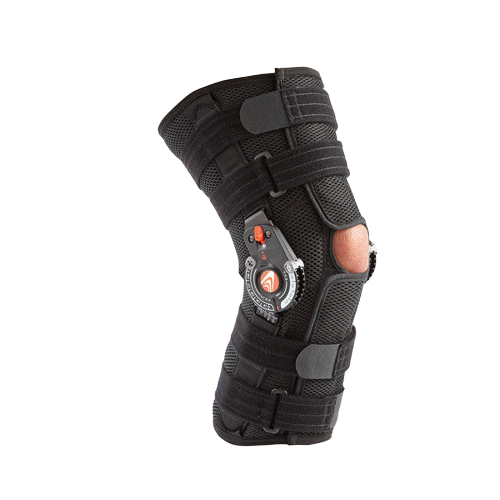
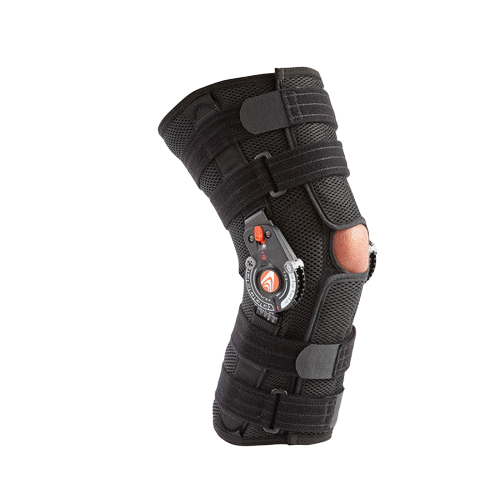
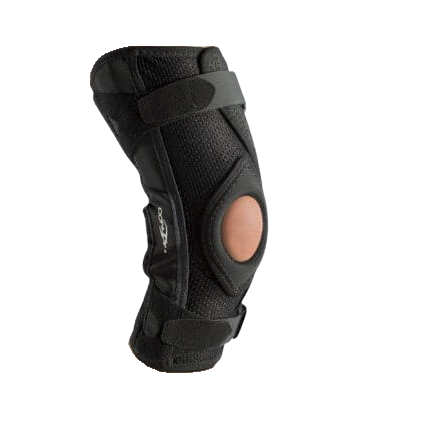
The DonJoy Sport Drytex Economy Hinged Knee Wrap Around is a functional hinged brace for daily use and lower-impact activity. Bilateral polycentric hinges provide medial and lateral stability while allowing natural knee flexion and extension, making this a practical option for people managing a non-surgical or partial meniscus tear during walking, daily tasks, and light activity.
The Drytex material is a breathable neoprene alternative that manages heat during extended wear, which matters for anyone keeping the brace on throughout the day. The wraparound design applies without removing footwear, and adjustable straps allow for a fine-tuned fit as the day progresses. An optional popliteal cutout reduces bunching behind the knee during repeated flexion, which is useful for people on their feet for long stretches.
This is the appropriate choice for non-surgical meniscus support, return-to-activity use, and anyone looking for a lightweight hinged brace suited for all-day wear.
DonJoy X-ACT ROM Knee Brace
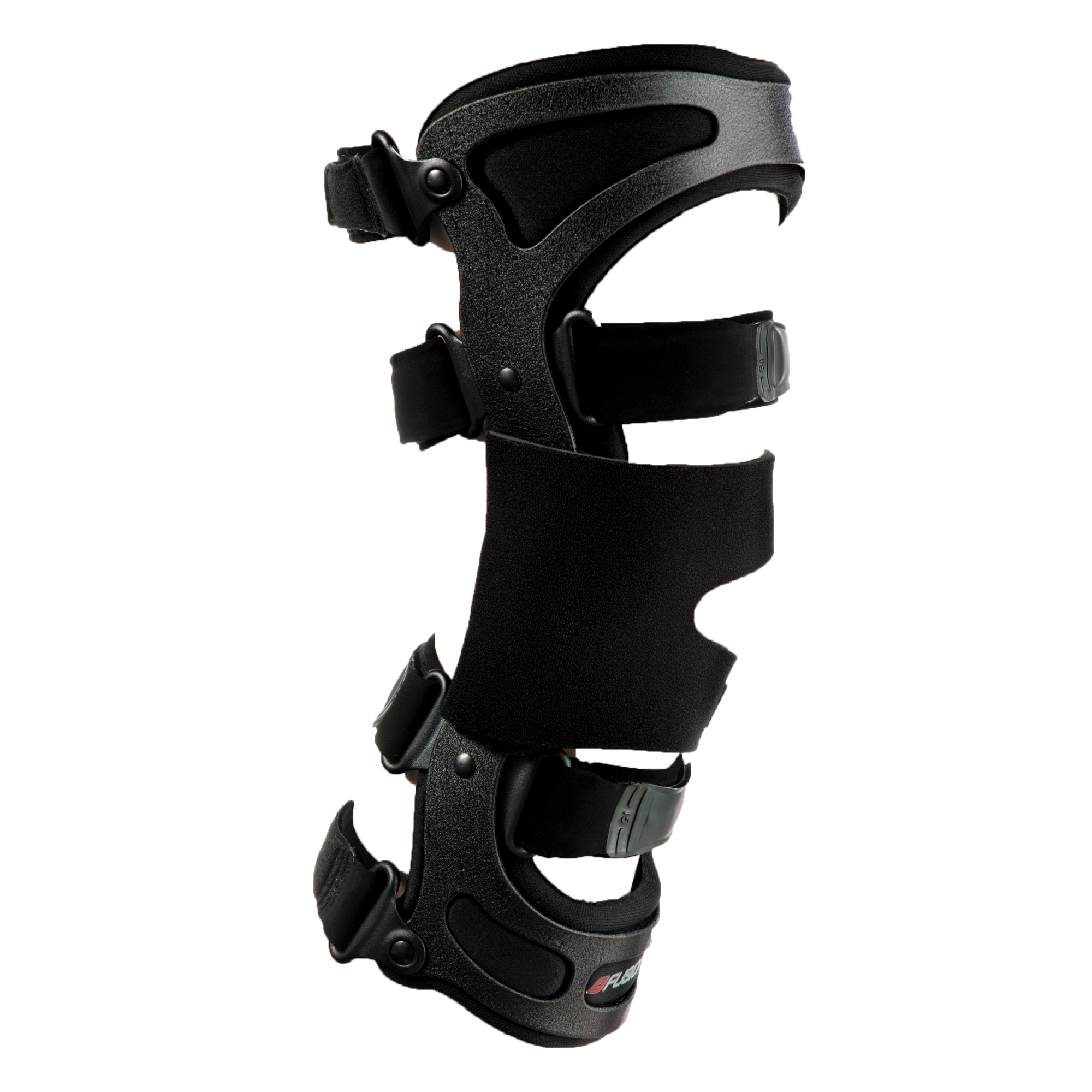
The DonJoy X-ACT ROM Knee Brace is a post-operative brace for use following meniscus surgery. Adjustable aluminum hinges can be set to specific flexion and extension limits by a physician or physical therapist, allowing precise ROM control at each stage of recovery. This matters because the allowable range of knee movement changes as healing progresses, and having those limits set accurately reduces the risk of setback.
Anti-migration foam and a dynamic suspension frame contour to the leg, keeping the brace in place without constant readjustment. Swivel-action buckles allow one-handed application, which is helpful during the early post-op period when mobility is limited. Four independently telescoping sliders let strap placement be adjusted around the surgical site, giving your care provider flexibility to position the brace as needed.
Brace For Meniscus Tear: Matching Brace To Recovery Path
A knee brace for torn meniscus use during non-surgical management calls for functional stability rather than strict ROM restriction. The DonJoy Sport Drytex Economy Hinged Knee is the more practical fit for this situation, providing the medial and lateral stability non-surgical recovery typically requires in a format comfortable enough for all-day wear.
For people who have had meniscus surgery and are in the controlled recovery phase, the DonJoy X-ACT ROM is the appropriate option. Its adjustable ROM settings allow the care team to define exactly how much movement is permitted at each stage. For more details on comparing options by tear type and severity, our guide on the
best knee brace for meniscus tear walks through the differences in depth, and our full
hinged knee brace collection covers the broader range we carry.
Meniscus Surgery Recovery: What To Expect From Your Brace
For people recovering from meniscus surgery, a few practical points go a long way before ordering.
First, order the brace before surgery so it is ready when you return home. ROM settings are configured by your care provider, so coordinate with your surgeon or physical therapist on the initial limits beforehand. Our
meniscus surgery recovery collection covers additional products for that stage, from bracing to post-surgical support. For guidance on wear duration, our
how long to wear knee brace for torn meniscus guide walks through that timeline in practical terms.
Cold Therapy Alongside A Meniscus Brace
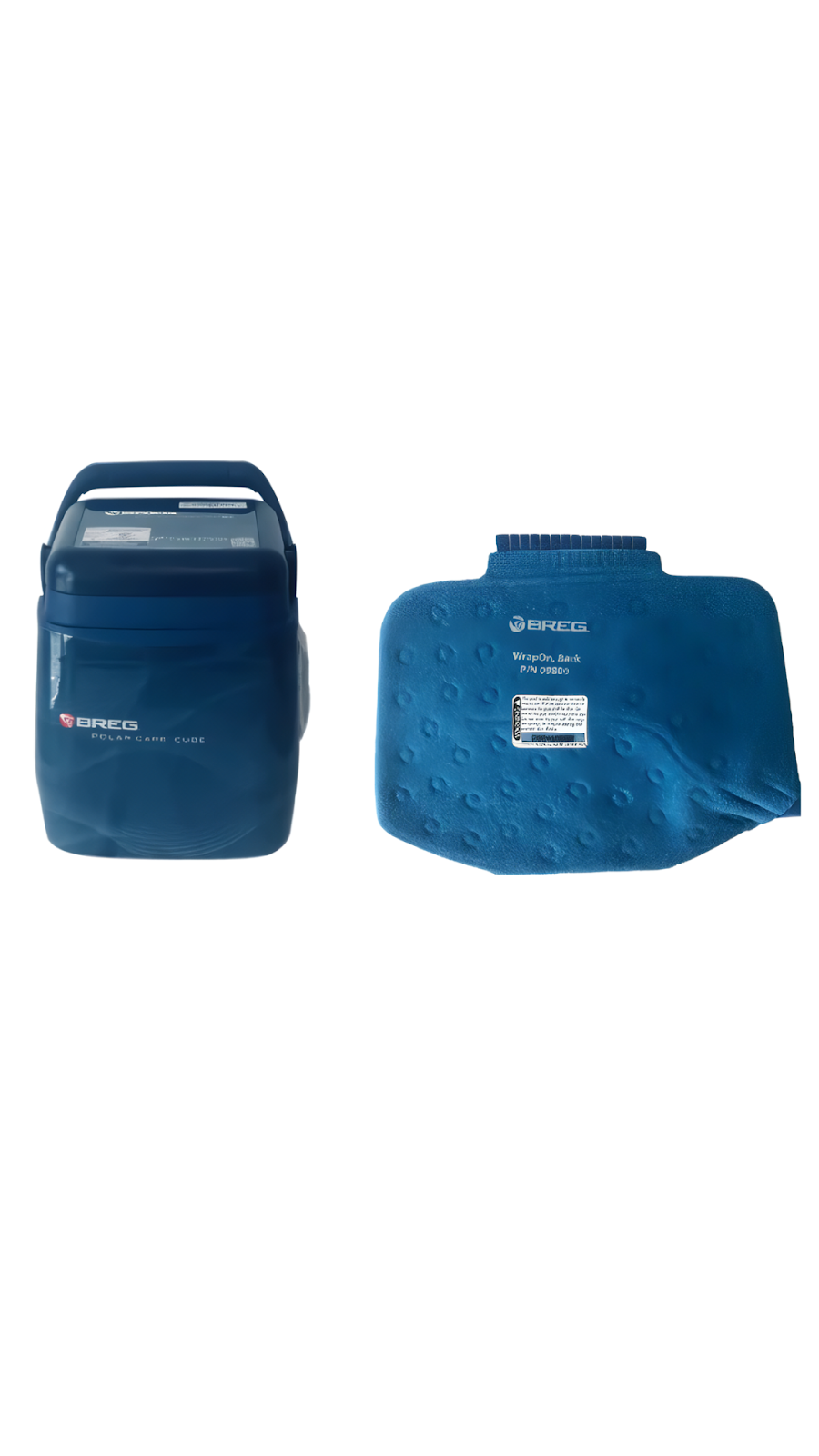
A knee brace handles joint support during movement. Cold therapy addresses the knee during rest, particularly after activity or a procedure. The two are used at different times: the brace during movement, cold therapy during recovery periods.
Cold therapy is a major focus at Ortho Bracing, and for good reason. Managing swelling and discomfort after activity or surgery can be just as important as the brace itself. Our
cold therapy for knee pain resource covers the available options and how to add them to your recovery routine.